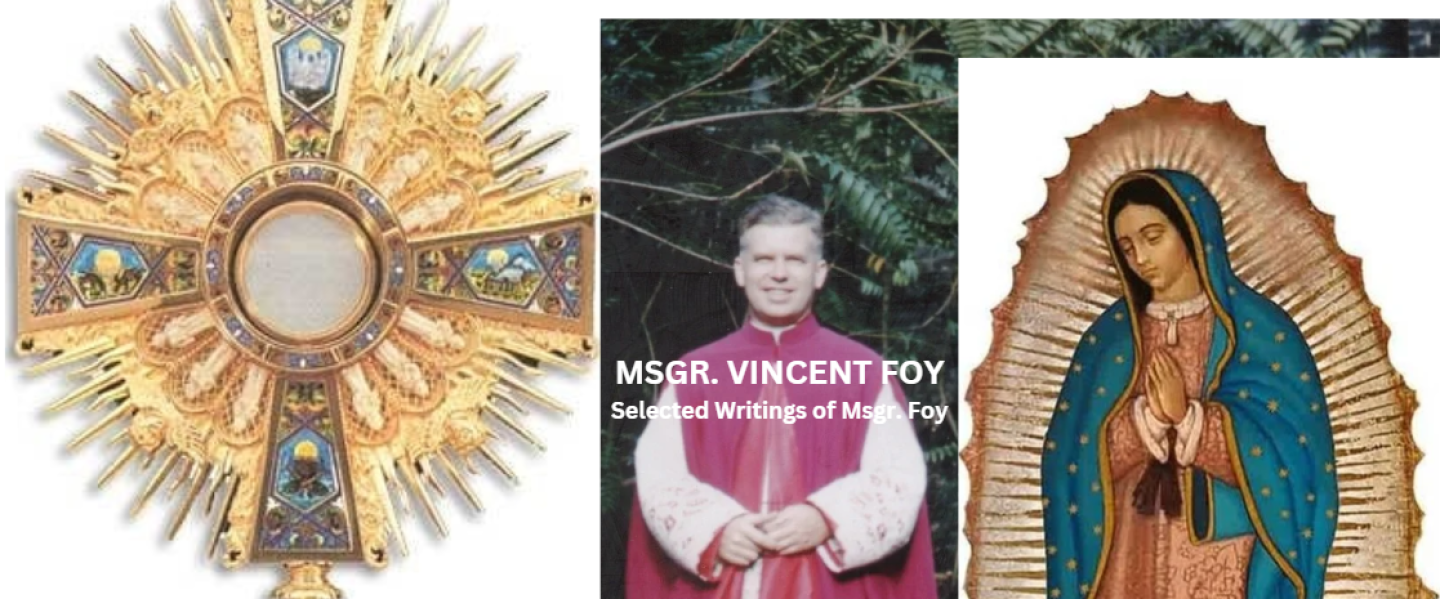
Bishop de Charbonnel, Second Bishop of Toronto. By Monsignor Vincent Foy

 Bishop de Charbonnel, Second Bishop of Toronto

By Monsignor Vincent Foy

Bishop Michael Power, first bishop of Toronto, died of typhus on October 1st, 1847. The first choice of a bishop to succeed him was Fr. John Larkin, an English priest who had been a professor at the Grand Seminary in Montreal. In 1840 he severed his relations with the Sulpicians and became a Jesuit. The Bulls of his appointment were issued in 1848 but Fr. Larkin refused to accept them.

The second choice for Toronto was that great and holy churchman Armand Francis Marie, Comte de Charbonnel. He belonged to a distinguished family whose titles went back to the second crusade in the twelfth century. His father saved the two daughters of Louis XV, aunts of Louis XVI, by arranging their escape from France during the Revolution.

Bishop de Charbonnel had been trained at the Sulpician Seminary in Paris, and was ordained in 1825. He was for a time professor of Dogma and Holy Scripture at Lyons. In 1833 he prevented a riot at Lyons and was offered the Cross of the Legion of Honor, which he refused. He came to Montreal in 1839 and two years later went for a year to Baltimore to learn English. It is of interest that he gave the priests’ retreat in Toronto in 1845. During the typhus epidemic of 1847 he worked tirelessly among the sick and was stricken himself. He was at death’s door for some time. On his recovery he returned to France.

Bishop de Charbonnel was named bishop of Toronto on March 15, 1850. He went to Rome and begged the Holy Father to withdraw his appointment, but the Holy Father insisted and so he was consecrated bishop by Pope Pius IX on Trinity Sunday, May 26, 1850, in the Sistine Chapel.

Arriving in Toronto on Sept. 21, 1850, Bishop de Charbonnel took formal possession of his See on the following Sunday. At that time there were 8000 Catholics in Toronto in a population of 30,000. There were two Churches: St. Paul’s and the Cathedral, served by three priests: Frs. Carroll, Harkin and Fitzgerald. There was one religious community: the Sisters of Loretto.

Among the many problems he faced, the new bishop found that there was a heavy debt on St. Michael’s.  The cathedral was still largely unfurnished, with bare white walls and plain glass windows. The bishop retired one mortgage of over $10,000 with his personal funds, all he possessed. There was another debt of about $60,000. To help reduce this debt the bishop visited many places in Canada and the U.S. asking for help for the poor diocese of Toronto.

With great zeal and perseverance Bishop de Charbonnel laboured for the spiritual needs of the diocese. In 1851 he brought from Philadelphia four Sisters of St. Joseph, to take care of the orphans, the poor and the aged. He wrote in 1852: “These Sisters of charity have charge of 55 orphans, visit the sick and help the poor”. In 1856 began the building of the House of Providence. In 1851 also, he brought to Toronto four Christian Brothers to take charge of the Separate Schools. In 1852 he brought from France four Basilian Fathers, the mustard seed which was to develop into St. Michael’s College.

It can be truthfully said that we owe our Separate School system to Bishop de Charbonnel. He fought vigorously and persistently for justice for our Catholic schools. One injustice was that if there was even one Catholic teacher in a public school, the Separate School in that area was forced to close. Dr. Egerton Ryerson, Superintendent of Schools, predicted that by this means Catholic Schools in Upper Canada would cease to exist. Bishop de Charbonnel was instrumental in getting this injustice removed, but others remained. An interesting account of Bishop de Charbonnel’s crusade for Catholic education is a chapter entitled “The Growth of Separate Schools” in “The Municipality of Toronto, a History”, Vol. 2, The Dominion Publishing Co., Toronto, 1923.

Part of the immense burden on Bishop de Charbonnel was lifted when the diocese of London was created in 1855, and the diocese of Hamilton in 1856.

Long hoping to live a more contemplative life and believing that Toronto would be better served by a bishop whose first language was English, Bishop de Charbonnel felt his prayers and petitions were answered when Father John Joseph Lynch, President of the College of Holy Angels, Niagara Falls, was chosen and consecrated coadjutor on November 20, 1859. Bishop de Carbonnel resigned his See on April 26, 1860, and was named Bishop of Sozopolis. Shortly after he returned to France.

It is commonly thought that when he resigned as bishop of Toronto, Bishop de Charbonnel retired to a monastery for the rest of his life. One account reads: “Bishop de Charbonnel, who for many years had longed for the silence and tranquility of monastic life, tendered his resignation to Pius IX and entered the austere Order of the Capuchins. He died, almost a nonagerian, in 1891”, (“Canada and Its Provinces”, Publishers’ Association of Canada, Ltd., 1914, Vol. X1, p.61).

The facts are somewhat different. The bishop entered the Capuchins and after his novitiate was sent to Lyons. There he was entrusted with the work of promoting the Society for the Propagation of the Faith. Later he was appointed Auxiliary to the Cardinal Archbishop of Lyons. He conducted more than fifty priest retreats, besides those to religious communities, missions in parishes, confirmations in six dioceses and ordinations in Lyons and Annonay. He represented his Archbishop at the first Vatican Council and while in Rome was named Archbishop of Sozopolis by Pope Leo XIII.

Archbishop de Charbonnel continued his active labours until he was 85. Then he devoted himself to prayer and to hearing confessions in the Capuchin monastery at Crest. The Golden Jubilee volume of Toronto Archdiocese gives this account of his death: “The end came and found him still at work. On Holy Saturday, when he had spent several hours in the confessional, he was taken ill. On the following day, Easter Sunday, March 29, 1891, the soul of this venerable, saintly prelate passed to its reward for the long and useful life worn out in the glory of God and the salvation of his neighbour”. There at Crest he was buried in the monastery vault.

In Toronto, the Sisters of St. Joseph have not forgotten the founder of the House of Providence. In a corridor of the Providence Health Centre is a picture of their early Superiors who devoted their lives to the poor and disabled and aged. At the beginning of this group of venerable Sisters is a picture of Bishop de Charbonnel. We also ought to remember him, for all of us owe a debt of gratitude to this holy prelate. In the midst of all his problems in Toronto, he kept his peace and even spiritual joy. He wrote while in Toronto: “If I could laugh in English as well as I can in French, my gaiety would be excessive”.

Almost Ordained. By Monsignor Vincent Foy

Almost Ordained

Originally published in Emeritus, Volume 1, Issue 4

By Monsignor Vincent Foy

The summer of 1939 was an exciting one for me, full of hope and joy and new experiences in the priesthood.

Ordained on June 3rd 1939 at the age of 23, with no parish experience as is the fortunate case to-day, every day had its new challenges and surprises. Always in the back of my mind was the promise of Archbishop McGuigan that he would take me to Rome in September, where I was to live at the Canadian College and study Canon Law.

The question of where I was to go for the summer was settled by a ‘phone call’. In those days the newly-ordained priests learned of their appointments not by a formal letter, though that would come later, but by a notice in the morning paper. In mid-June Fr. Fred McGinn (died 1964, aged 60), then curate at Holy Name Parish, phoned me to give me the good news. “Congratulations” he said, “You are going to St. Catherine’s, to be a curate under Dean Cullinane at St. Catherine’s Church. I was a curate at St. Mary’s in St. Catherine’s and can tell you that is a great place to start.”

Soon after I arrived at 3 Lyman St., St. Catherine’s, also known as the Deanery.  The door was opened by Fr. Austin Sweeney ( R.I.P.), now No.1 curate, who graciously received me and showed me to my quarters. It was the room of Father Stan Cassin (died 1947, aged 47) whose belongings were still there. He had developed a stomach ulcer and was on leave for the summer. He was much loved and respected especially for  his work among young people.

So began a quite wonderful three months under Dean Cullinane ( died as Msgr. Cullinane, 1953, aged 68 ). I could literally write a book about that summer. Dean Michael Cullinane, whose brother was the Dean of Tweed, initiated me into the mysteries of pastoral care. He was kindly, good-humored, not above giving a visiting priest an exploding cigar, and a bit of an indirect disciplinarian. Once I had been with Mr. Coyle, a parishonor, to Niagara Falls and got back at 11.05 P.M.. The rectory door was locked and barred. Curates were supposed to be in at 11.00 P.M.. A few coins thrown up against the window of Fr. Sweeny got me re-admitted. I did not let that happen again.

In late July we had a visit from Archbishop McGuigan and his buoyant secretary, Msgr. John Virgil Harris (died 1950, aged 50). The Archbishop reminded me to have my trunk packed and be ready for Rome in September.

In August international affairs took a turn for the worse. Hitler demanded the return of Danzig. Germany signed a non-aggression pact with Russia. England was rapidly re-arming. In St. Catherine’s I noticed that tents were being put up outside the armouries and there was an influx of young soldiers.

Then came the fateful first of September. Hitler’s army invaded Poland. On September 3rd, a Sunday, I was walking down Church St.  in the evening when I heard the cry of a paper-boy:  “ Extra! Extra! England declares war! Athenia sunk!” Only a few hours after England went to war the Athenia, an ocean liner on route from Scotland to Montreal, was sunk by a German submarine.  Many passengers drowned.  Of course my own dream of going to Rome went up in the smoke of battle and I wondered about the future.

The following Saturday a telegram from the Archbishop was delivered at the Deanery. Dean Cullinane was told that I was to report to the Chancery Office on Tuesday, packed and ready to go to the Catholic University of America at Washington. The telegram arrived late at night and I was told about it the next morning. That Sunday I was preaching. The Dean asked me to sit down after the homily and to look surprised when he read the telegram to the congregation. I was to look surprised three times that morning. In the afternoon the Dean told the Sunday-school children that I had volunteered to go to Rome by submarine, but the Archbishop thought it too dangerous.

Tuesday morning I presented myself to the Archbishop at 200 Church St.. I had purchased a new rain-coat because I had been told that there was much rain in Washington. Archbishop McGuigan greeted me warmly and handed me two letters, one a  letter from Msgr. Brennan, the Seminary rector ( died 1978, aged 87 ), detailing my seminary record and the other a letter of introduction to Dr. Motry, Dean of the Faculty of Canon Law. I was directed to see Fr Callaghan, the Chancellor,( died 1960, aged 64 ), who would get the information about my accommodations.

While I was in his office Fr. Callaghan ‘phoned Dr. Motry. Dr. Motry said yes, he was expecting Fr. Foy and that lectures had already started. When asked about accommodations he said: “ I have nothing to do with that. That is in the hands of Dr. Armand at the Priests’ Residence.” Next came a call to Dr. Armand. I could see a look of surprise on Fr. Callaghan’s face. Dr. Armand informed him that because of the war their house was packed, with not a room left. I suggested that perhaps I could stay at one of the Religious Houses. The reply was ( I never understood why ), “If you can’t stay with the other diocesan priests, you are not going.”

I returned to the Archbishop’s Office and told him the news. He commiserated with me, but then his face lit up. “Ah! Now I remember! Only last week I received a letter from Fr. Aderville Bureau ( died 1949 in the crash of the Canadian Pilgrim plane over the Alps ). He is the dean of the new Canon Law Faculty at Laval started because of the war. They are anxious for more student priests.” A phone call settled everything. That night I was on the train to Quebec. It was like going to another world. Previously I had never traveled further than Buffalo.

Here I would like to add that another class-mate was sent away for post-graduate studies:  Fr. Matt Darby (died 1970, aged 56 ). He knew early in September that he was going to Laval to study theology, and envied me when I phoned to tell him I was going to Washington. He did not relish taking courses in Latin. In the seminary his highest marks were in Canon Law and mine were in Dogmatic Theology. Did the Archbishop get our marks confused? We never knew.

Fr. Darby arrived in Quebec City the day after I did, on a Thursday. I was already in my quarters at the

“Maison des Etudiants”  on Rue St. Joachim, an old and dilapidated residence for student priests, where rats roamed at liberty.The “Maison” was about a 20 minutes walk from the university. I had already reported to the Chancery Office as required, to obtain the “ Faculties” of the Archdiocese, and was given a copy of the Archdiocesan regulations.  I was down at the railway station to greet Fr. Matt as he stepped off the train. “Bienvenue a Quebec”, I said, and I could see that he was not altogether happy about his new life. “Do I have to wear that ?” he asked, as he looked at my soutane. “Yes” I said, “and there are a few more rules I will tell you about. The good news is that because we are from outside of the province, we don’t have to wear the tonsure.” The tonsure was a round bald spot on the top of the head which then cost Quebec priests ten cents when they got their hair cut. So began our great adventure in dear old Quebec.

Novalis, Kung and Truth. By Monsignor Vincent Foy

Novalis, Kung and Truth

Published in Catholic Insight, 2009.

by Monsignor Vincent Foy

Good reading has good effects and bad reading has bad effects. Through reading the greatest of all books, St. Augustine was converted from a life of sin to a life of holiness. Through reading the lives of saints, St. Ignatius of Loyola took his first steps to sanctity. Through bad reading like that of dissident theologians and pornography, many have fallen from faith and grace.

In her Canon law, the Church tries to protect the faithful from bad reading. Canon 827.4 reads: “Books or other written materials dealing with religion or morals may not be displayed, sold or given away in churches or oratories, unless they were published with the permission of the competent ecclesiastical authority or were subsequently approved by that authority.”

Other canons opposing bad reading are in The Code of Canon Law, under the title, “The Means of Social Communication and Books in Particular” (Canons 822-832).

Given the wall of protection the Church raises to protect her sons and daughters from dangerous literature, it was a shock to me to read a recent book review of Disputed Truth, Memoirs II, by Hans Kung in the Catholic Register.

It has been published by the Catholic publisher, Novalis. The Novalis trademark was owned by St. Paul University of Ottawa, which was responsible, with the archbishop of Ottawa, for publications carrying the Novalis imprint. Novalis has published other books by Hans Kung, including My Struggle for Freedom and On Being a Christian.

Research shows that Novalis has also published other works of heterodox teaching. An example is its marriage preparation course, “Mosaic” (1980, 1986), which called the prohibition of contraception “an ideal” and taught the errors of proportionalism, condemned by Humanae vitae (n. 14). It also published for French-speaking Catholics “Projet Mariage” (1987), essentially a sexology course. It knew nothing of Humanae vitae or Familaris consortio.

The works of Hans Kung have done immense harm to the faith. Their errors have penetrated Catholic colleges and seminaries. I recall visiting and English seminary in 1976. In the professor’s lounge, the rector waved a copy of Hans Kung’s On Being a Christian. He said it was the best thing to come along in a long time. None of the other professors objected. I said, “Monsignor, Hans Kung teaches many errors and is a dissenter from Humanae vitae.” He replied, half jocosely, “I think you are a Vatican spy.” Incidentally, six months later, he was named an auxiliary bishop.

In 1979, the Holy See and the German Bishops Conference took away from Hans Kung his licence to teach Catholic theology. He was forced to resign from the Catholic faculty at Tubingen. Despite this, Novalis, in advertising On Being a Christian, called Kung “one of the greatest theologians of this century.” In its blurb for My Struggle for Freedom, Kung was called “a giant of the Christian Church” and “one of the most important theologians of our time.” In describing Disputed Truths, Memoirs II, Novalis tells us it is “written with the voice of a prophet concerned for the future.”

The heads of Catholic universties are responsible for all media of communications over which they have control. It is their duty to see that nothing is taught that is incompatible with the Magesterium of the Church. They, and those who in any university teach subjects that deal with faith or morals, must make a solemn profession of faith (c. 833 of the Code of Canon Law). That would certainly pertain to the heads of St. Paul University. To them also would pertain n. 2497 of the Catechism of the Catholic Church: “By the very nature of their profession, journalists have an obligation to serve the truth and not offend against charity in disseminating information.”

In the words of that great defender of the faith, Dietrich von Hildebrand, it is “an ignominious betrayal committed by those Catholic universities, colleges and schools that allow many things to be taught within their walls in blatant contradiction of faith. Such a practice is not only self-condemnation of these institutions, not only a betrayal of their raison d’etre, it is much worse: it is a betrayal of Christ; it is an apostosy masked by the slogan of ‘academic freedom'” (The Charitable Anathema, Roman Catholic Books, 1993, p. 116). Surely, these words apply also to enterprises that support false doctrine.

The review of Hans Kung’s latest book in the Catholic Register is written by its editor and publisher, Joseph Sinasac. He concludes his review with the words, “But the Church needs people like Kung even when they are wrong and disagreeable. Sometimes, they can also be right.” I suggest that the Church, repository of the fullness of revelation, needs Hans Kung like it needs a dose of poison! What the Church needs is proclaimers and guardians of the truth.

Pope John Paul II called truth “the deepest necessity of the human spirit” (World Youth Day, Aug. 19, 1989). In writing his second letter, St. John the Apostle gave the advice: “If any one comes to you and does not bring the doctrine (of Christ), do not receive him into the house, or give him any greeting; for he who greets him shares his wicked work.” St. Paul spoke of “the Church of the living God, which upholds the truth and keeps it safe.” Christ, before Pilate, said, “This is why I have come into the world, to bear witness to the truth; and anyone who is on the side of truth listens to my voice” (John 18: 37).

It is the truth lived that gives us the freedom of the sons and daughters of God. We ought to pray for the conversion of Catholicism of Novalis.

Postscripts

1. A few days after I had written the above, I learned that on Oct. 1, 2008, Saint Paul University sold Novalis to Bayard of Canada. Bayard of Canada is a sister company of Bayard of France, a large multi-national Catholic publishing company. The Augustinians of the Assumption Fathers of Quebec City own 86 percent of Bayard of Canada.

Will Bayard of Canada purge Novalis of any books unfaithful to the Magesterium? It would seem that the chances are remote without the intervention of the responsible ecclesiastical authority. Since 2000, Bayard has been handling the distribution and marketing of Novalis books and magazines.

2. From his latest book, it is evident that Kung remains bitter towards Pope Benedict XVI. After Cardinal Ratzinger was elected Pope, Kung asked for a meeting with his former colleague a the University of Tubingen. The Holy Father met him at Castel Gandolfo for four hours in late September of 2005. It was mutually agreed that they would not discuss “persistant doctrinal differences.” They talked about faith, science, world ethics and the secularization taking place in European countries like Ireland, Germany and Spain. There has been no follow-up. When Kung’s licence to teach Catholic theology was removed in 1979, he called Cardinal Ratzinger the “regressive grand inquisitor of the post-Vatican Council period.”